People talk about taste like it’s some skill you develop.
They’re not entirely wrong. You read better books, listen to better music, watch better films, study the greats, and gradually learn what’s good.
That implies what’s good is objective, which Paul Graham argues it is. If some art is genuinely better than other art, he says, then people who recognize good art have better taste.
And there’s truth in that. Pretending there’s no difference between a Picasso and a child’s drawing doesn’t feel honest.
But that explanation has always felt incomplete to me. What we call “good” is also shaped by the powerful, and almost always to their advantage: what gets preserved, what gets taught, which accents sound intelligent, which aesthetics get associated with sophistication, everything. Entire canons are built this way.
But canons rotate too. They change when power shifts, as it always does.
So taste can’t be purely objective, existing in some political vacuum. But it doesn’t feel entirely constructed either. And the space between those two things is where taste actually forms, at least for me.
Now I’m broadly dismissive of most modern art. I find a lot of it inaccessible. I understand what people see in it, but it rarely moves me. And yet years ago, when I first encountered the Fountain by Marcel Duchamp—a porcelain urinal, signed “R. Mutt,” turned upside down, and called art—something happened that I couldn’t argue with.
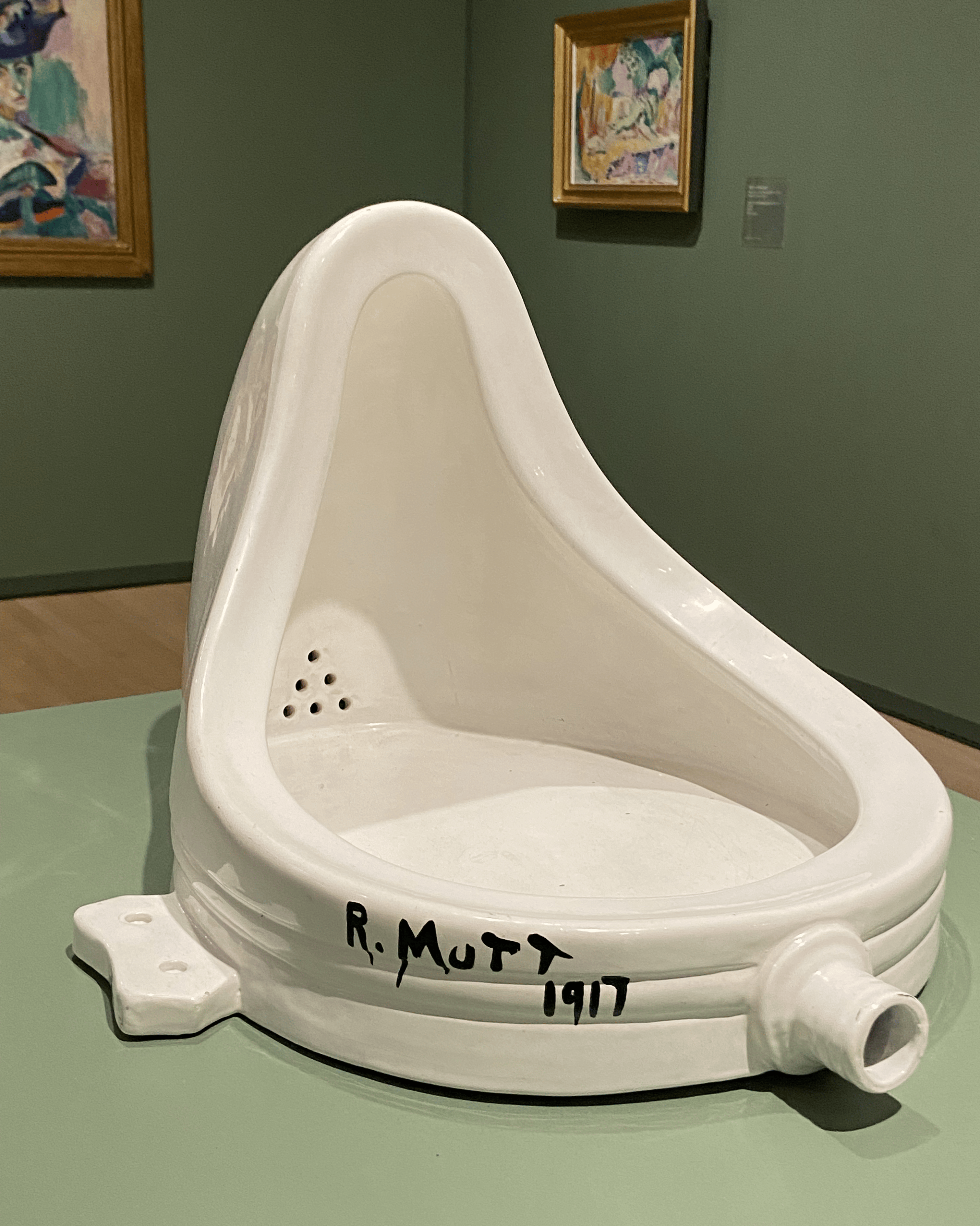
I understood why it was considered art, but that wasn’t the point. The point was that it moved me, past every objection I had about modern art. I didn’t reason my way into liking it. I didn’t even want to like it. But I couldn’t defend myself against it.
So when I unexpectedly saw it at the SF MoMA last year, wandering in because my flight was too early and my hotel room wasn’t ready yet, it reduced me to silence all over again.
I thought about it again today, passing the building. That experience, and others like it, made it obvious that there’s a layer of taste that sits below argument, beneath theory, beneath status, beneath whatever else you think you’re supposed to admire.
Power structures determine what you’re exposed to, and taste is partly a function of that exposure. But within the space of what you encounter, something can exceed its own explanation, get past your defenses, and take root before your mind can catch up.
Maybe taste isn’t just a skill you develop or an external standard you learn to decode.
Maybe it’s mostly leaving enough room in your life for something unexpected to reach you at all. To get past your defenses, and become the lens through which you see everything after.
Maybe what you surrender to becomes what we call taste.

